REPLACEMENT & RETROFIT
Cooling Tower Replacement and Performance Improvement
Support for ageing, damaged or underperforming cooling towers—from individual components to wider refurbishment and upgrade scopes.
Start With the Existing Tower
Replacement work is most effective when the existing condition, duty and failure mode are understood first. EVAPNEX can review photographs, dimensions, drawings, operating data and available nameplate information to help define the scope.
The objective may be simple like-for-like replacement, improved reliability, lower pressure drop, better water distribution, restored capacity, reduced drift or easier maintenance.
Useful Information to Send
- Tower manufacturer and model, if known
- Overall dimensions and cell count
- Current water flow and temperatures
- Design wet-bulb temperature
- Photos of fill, eliminators, nozzles, fan and structure
- Drawings or old data sheets
Fill Replacement
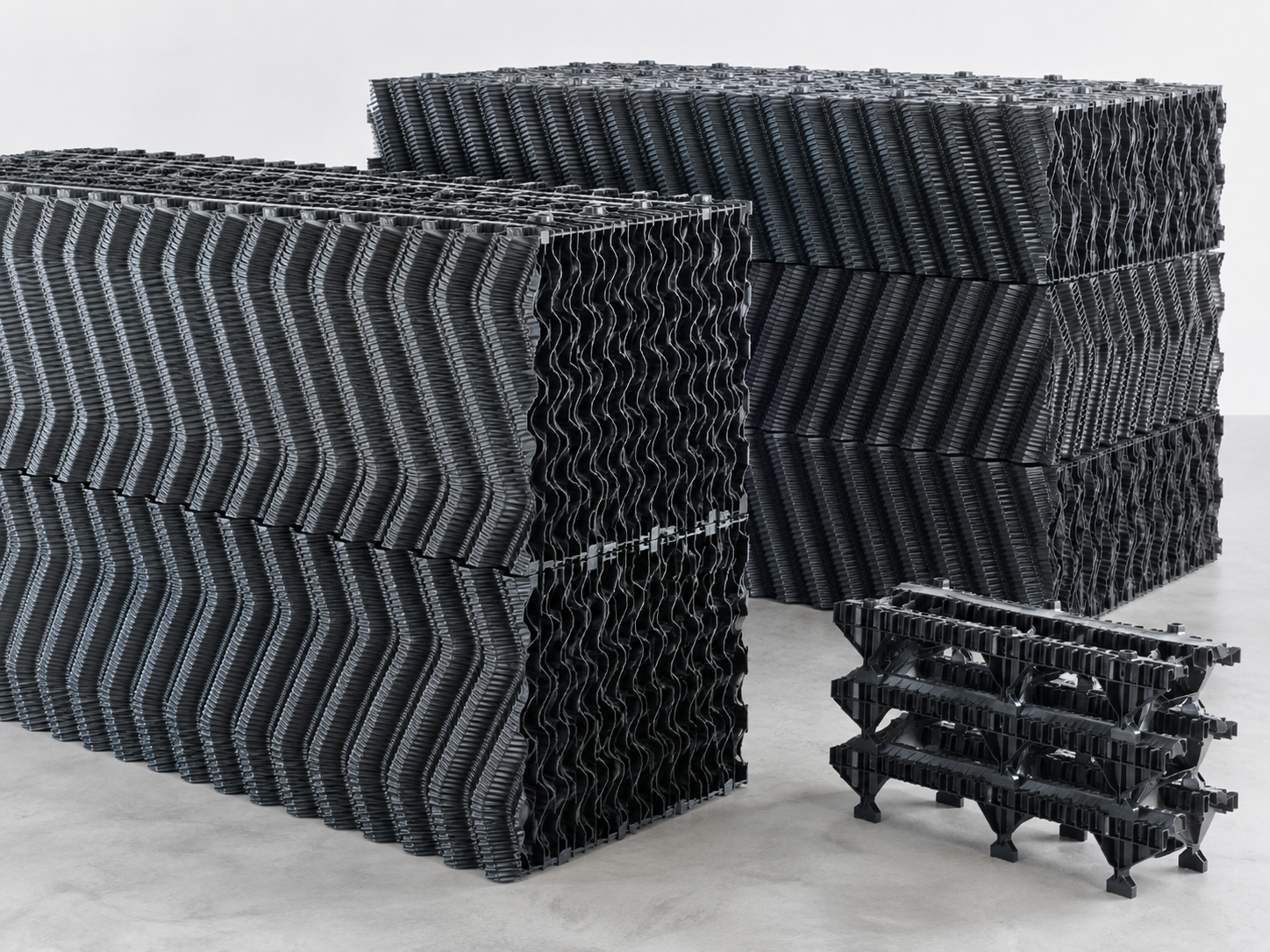
Replace damaged, fouled or unsuitable fill with a configuration matched to thermal duty, water quality and available static pressure.
Drift Eliminator Replacement
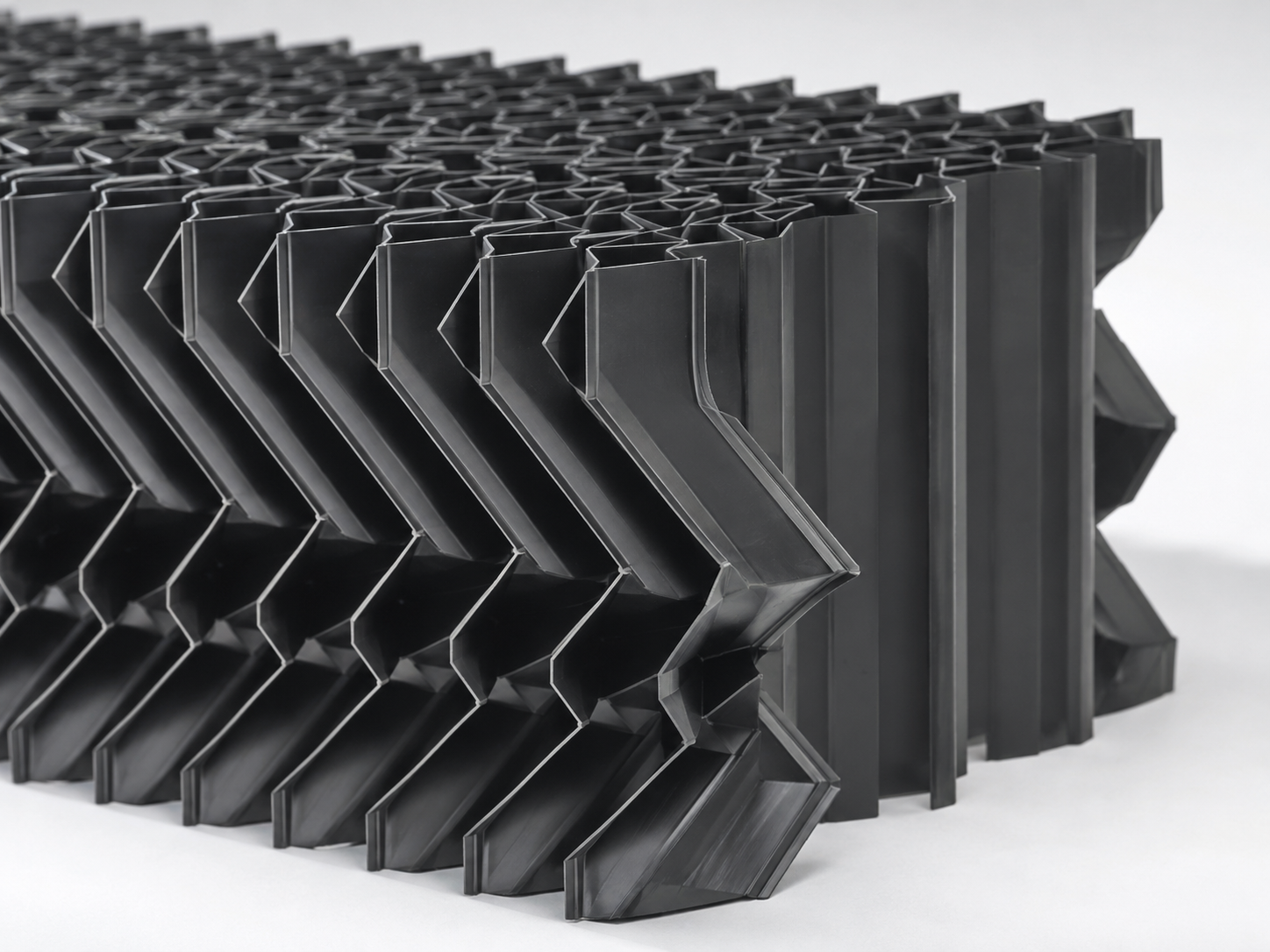
Upgrade or replace damaged eliminators to improve droplet capture while controlling air-side pressure loss.
Water Distribution Retrofit
Review nozzle type, spacing, pressure and piping arrangement to improve fill wetting and reduce dry zones.
Fan & Drive Upgrade
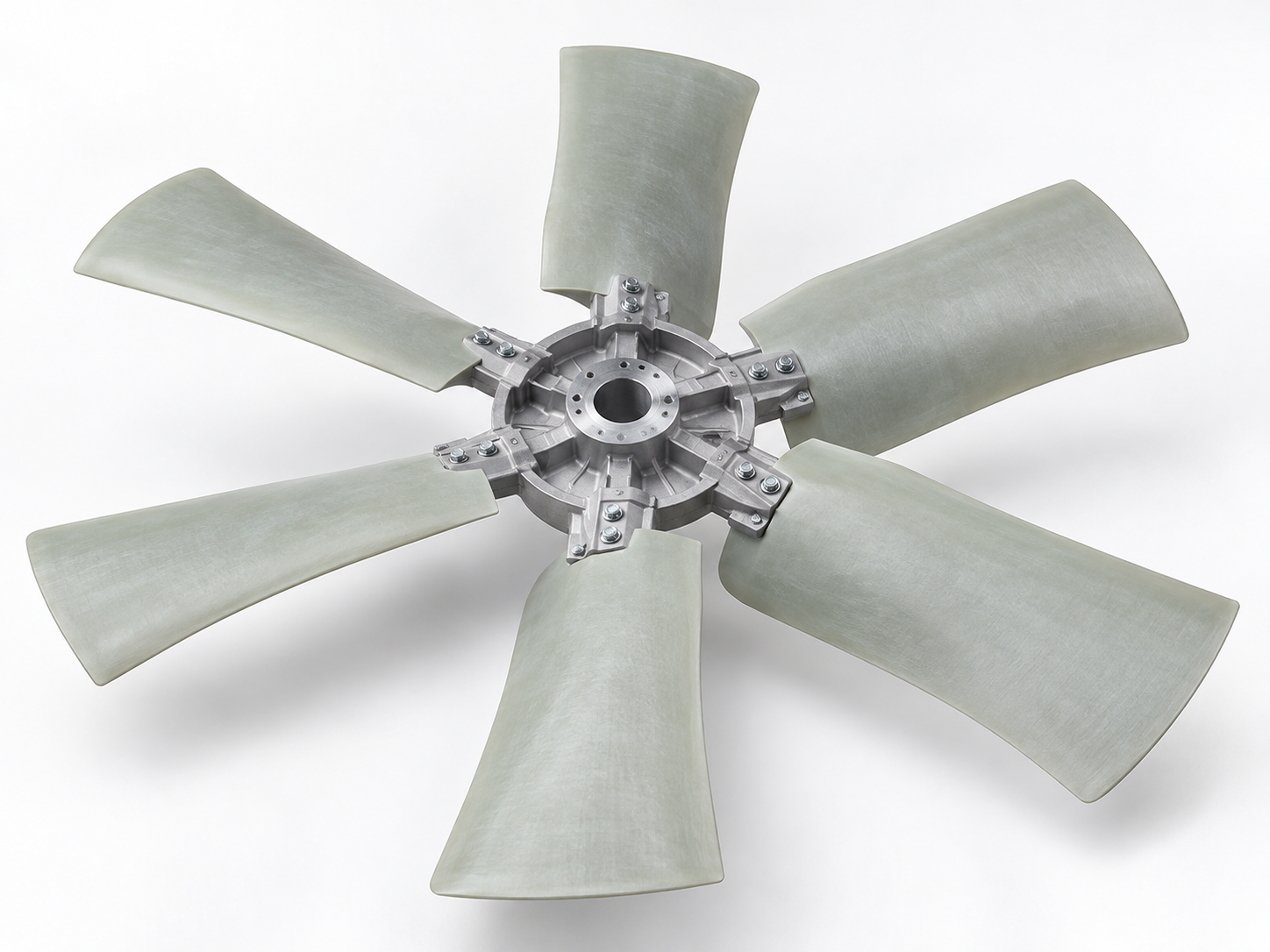
Evaluate fan blades, hub, gearbox, motor, drive shaft and couplings when reliability, airflow or energy use needs improvement.
FRP Repair & Structural Items
Replacement or repair scopes for panels, fan cylinders, gratings, handrails, access components and FRP structural members.
Capacity Improvement
Where the tower is underperforming, review the thermal duty and system resistance before changing fill, airflow or water distribution.
A Practical Retrofit Workflow
We prefer to define the problem before proposing hardware. This avoids replacing one component while leaving the actual performance constraint unchanged.
- Collect existing tower data
- Identify damage or performance gap
- Check thermal and hydraulic constraints
- Define replacement or upgrade scope
- Confirm dimensions, materials and interfaces
- Supply, documentation and installation support as agreed
Send Us the Existing Tower Details
Photos and dimensions are often enough to start a replacement discussion.