Industrial Refrigeration for Food, Dairy & Beverage
Reliable temperature control supports food processing, product quality, utility-water cooling and refrigeration operations. EVAPNEX can review the equipment needed for a defined cooling duty, from a stand-alone evaporator or chiller to an integrated refrigeration and heat-recovery enquiry.
Near-Freezing Process Water & Chilled Utilities
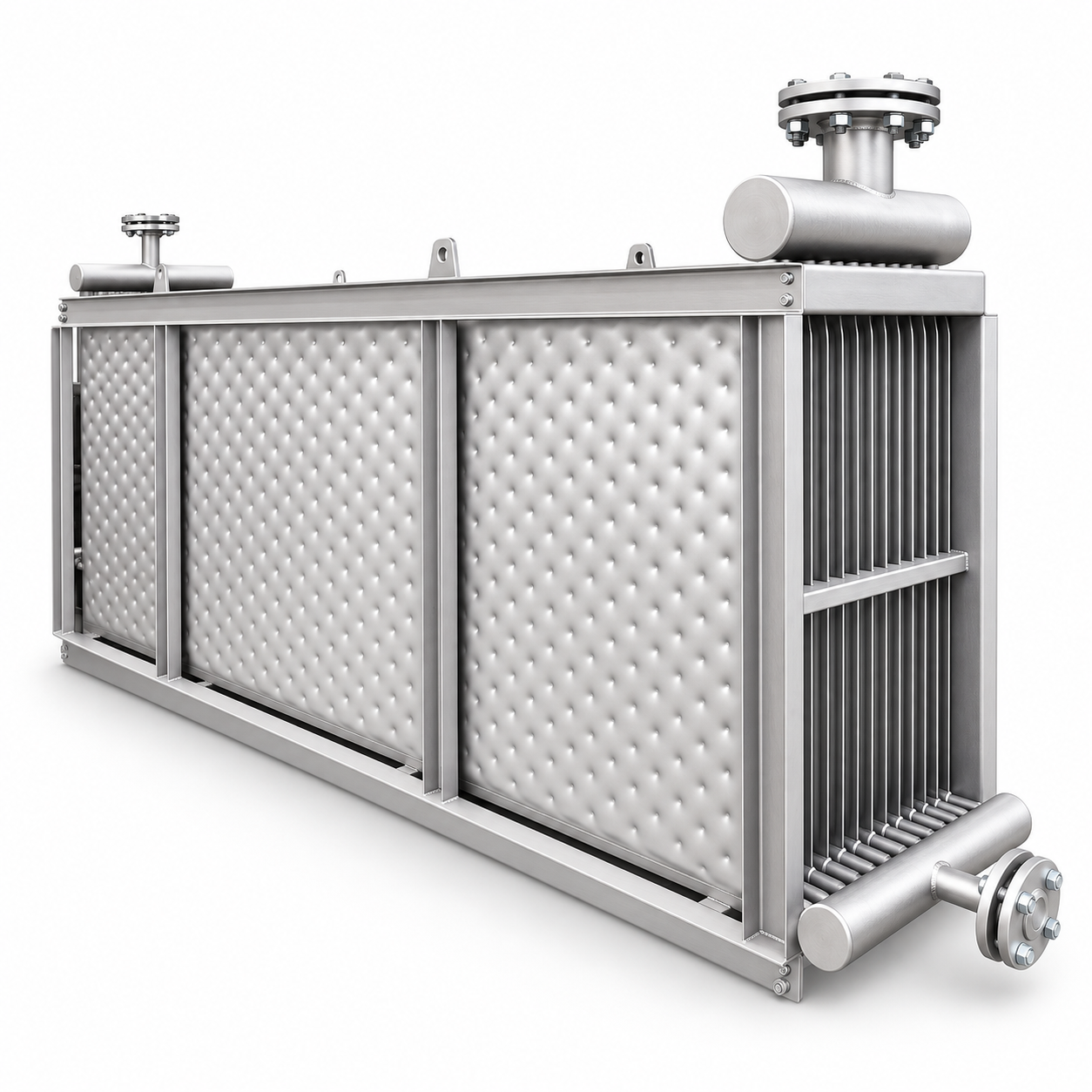
Falling-film ice-water chillers use a water film flowing over refrigerated heat-transfer plates to produce chilled process water close to its freezing point, subject to the specified manufacturer operating range. Water distribution, flow, refrigerant control, hygiene and freeze protection are essential design considerations.
A pillow-plate falling-film exchanger may be reviewed for dairy, beverage, food and other suitable process-water duties. It is distinct from an evaporator designed to concentrate a food product.
Applications Across Food and Dairy
Milk Reception & Dairy Processing
Cooling requirements may include incoming milk cooling, chilled utility-water production, process-loop cooling and heat rejection from production machinery. Hygienic separation, cleanability, the applicable food-safety design and the plant’s required cooling temperature must be confirmed.
Beverage & Brewing
Chilled water and glycol circuits can serve suitable fermentation, beverage processing, product-cooling and utility duties. Select equipment against process heat load, fluid composition, flow, temperature control and sanitation constraints.
Meat, Poultry & Seafood Processing
Appropriately designed refrigeration systems can supply chilled utility water or glycol for plant cooling and designated process applications. Specify the required temperature, washdown environment and applicable hygiene and process-safety requirements.
Packaged Foods & Cold Storage
Review chilled-water, glycol and refrigeration heat-transfer equipment for processing, temperature-controlled utilities and cold-storage support. Product-specific refrigeration architecture and required evaporating temperature must be verified.
Cold-Chain & Processing-Plant Requirements
Beyond chilled process water, food and dairy facilities may also require chilled or frozen storage rooms, separate production-area cooling, product pull-down and machine cooling. Storage and product-cooling duties should be calculated from the product type and throughput, incoming and target temperatures, door traffic, insulation, defrost requirements and expected operating hours. Ripening or maturation applications also need process-specific humidity, airflow and ventilation requirements.
EVAPNEX can review component and refrigeration-equipment requirements with manufacturing partners; plant installation, commissioning and local refrigerant-safety responsibilities must be defined with appropriately qualified contractors. Explore cold storage and process refrigeration →
Equipment Scope
- Industrial water- or air-cooled process chillers; low-temperature glycol chillers.
- Falling-film ice-water chillers and pillow-plate evaporator assemblies for suitable chilled-water applications.
- Shell-and-tube DX or flooded evaporators and refrigerant condensers for new equipment or replacements.
- Heat-recovery chillers and heat pumps where hot-water demand overlaps the plant’s refrigeration load.
- Associated heat exchangers, closed-circuit coolers and component replacement enquiries.
Explore shell-and-tube evaporators, shell-and-tube condensers or heat pumps and heat recovery.
What to Send Us
- Process description and required cooling duty, chilled-fluid inlet/outlet temperatures and flow.
- Daily production schedule, peak/average load and permitted temperature variation.
- Fluid and water quality, glycol concentration, cleaning or sanitary requirements and any refrigerant preference.
- Available ambient or cooling-water conditions, site electrical supply and installed plant information.
- For heat recovery: existing heat-rejection conditions and required hot-water flow, temperature and operating hours.